Scrub typhus is a bacterial infection caused by Orientia tsutsugamushi, spread through bites of infected chigger mites. It leads to high fever, headache, rash and a black scab-like mark called an eschar. Early diagnosis and treatment with doxycycline are essential to avoid complications like organ failure. It is common in rural, forest and scrubland regions, especially during monsoon.
Table of Contents
- Introduction
- What is Scrub Typhus?
- Background & Global Context
- Key Issues
- 360° Analysis
- Impact on India
- Current Developments
- Challenges
- Possible Solutions
- Future Outlook
- Conclusion
- FAQs
Introduction
Scrub typhus is becoming a big health problem in India. Many people first think they have dengue, malaria, typhoid or normal viral fever, but later they find out it is actually scrub typhus. This disease spreads through tiny insects called chigger mites. They live in bushes, grasslands and forest areas.
The scary part is that many people do not know they have scrub typhus, so they reach the hospital late. As the climate changes and people spend more time in outdoor areas, more cases are being reported across India. This simple guide will help school students, competitive exam students and the general public understand scrub typhus easily.
What is Scrub Typhus?
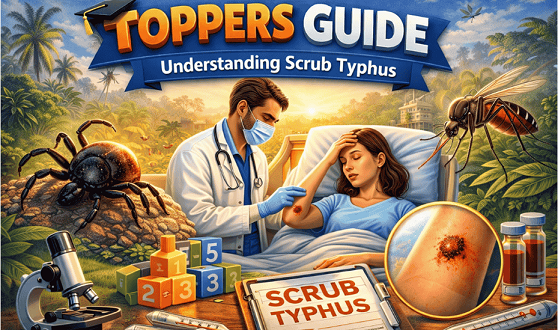
Scrub typhus is an infection caused by a bacteria called Orientia tsutsugamushi. It spreads when an infected chigger mite bites a person.
Main Signs:
- Sudden high fever
- Strong headache
- A dark scab on skin (called an eschar)
- Rash on the body
- Swollen lymph nodes
Note: It does not spread from one person to another.
Background / Where It Happens
Scrub typhus has been known for many years, especially during wars in jungle areas. It is common in many countries like Japan, China, Indonesia, Thailand and Australia.
In India, it is mostly found in:
- Tamil Nadu
- Kerala
- Karnataka
- Himachal Pradesh
- Assam & North-East
- Uttarakhand
- Odisha
- Chhattisgarh
- Andhra Pradesh and some other states
Most cases occur during monsoon and post-monsoon months.
Main Problems
we are facing multiple simptoms and problems if a scrub typhus bites. The following are some common symptoms:
- Often confused with dengue, malaria, chikungunya or typhoid.
- People in rural areas are not aware of the disease.
- Late diagnosis makes the disease more dangerous.
- The eschar (black scab) is small and often ignored.
- Tests like ELISA and PCR are not available everywhere.
- More cases have increased after 2020 due to climate changes.
- Can lead to serious problems in many organs.
360° Simple Analysis
Government View:
- Scrub typhus is a growing public health issue.
- Better testing centres are needed.
- Seasonal monitoring is important.
Public View:
- Most people do not know about this disease. Awareness about it must needed to protect from the diseases and further severity caused by it
- Looks like normal viral fever so confusion is common.
- Farmers, labourers and children are more at risk. It is spreading mainly in hilly areas and more deaths occur in those areas and multiple cases are filing in many states
Expert View:
- India’s scrub typhus cases are underestimated. Still the root cause of the cases are not found.
- Early treatment is very important. Do not neglect the illness if the symptoms are diagnosed earlier
- Finding the eschar helps in early diagnosis.
Impact on India
Economic Impact
- People miss work or school.
- High medical costs for families.
Social Impact
- Affects school-going children.
- More risk for outdoor workers.
Healthcare Impact
- Gets confused with dengue and typhoid.
- Need for more training for rural doctors.
Important for Exams: UPSC, SSC, State PSCs, Nursing, Medical Entrance, etc.
Some Simple Statistics
| Category Approx. Data (India) | |
| Annual suspected cases | Over 1 lakh |
| Highest cases reported from | Tamil Nadu, Kerala, Karnataka, Himachal Pradesh |
| Age group affected | All ages, including children |
| Season of highest cases | Monsoon and Post-monsoon |
Current Developments
- New fast testing kits being developed.
- More cases are being reported from South India.
- Government gives alerts during monsoon.
- More medical colleges are teaching about scrub typhus.
Challenges
- Mites are too tiny to see.
- Very low public awareness.
- People rarely wear full sleeves in fields.
- Rural areas have fewer testing labs.
- Looks like many other common fevers.
- People reach hospital late.
- Climate change helps mites spread to new areas.
Solutions
Public Health Steps
- Awareness in simple local languages.
- Posters in PHCs, schools and Panchayats.
Government Steps
- Better disease surveillance in affected areas.
- Affordable ELISA tests in district hospitals.
Community Steps
- Wear full-sleeve clothes.
- Avoid sitting on grass during monsoon.
- Clear bushes around homes.
Clinical Steps
- Early treatment with doxycycline.
- Training doctors to identify eschar.
Future Outlook
- Cases may increase due to warmer climate.
- Better testing methods will help early diagnosis.
- More public awareness will reduce deaths.
- India may develop its own rapid test kits.
Conclusion
Scrub typhus is a serious but treatable disease. With early detection, awareness and proper treatment, most people recover easily. As India faces many monsoon diseases, understanding scrub typhus is important for school students, parents, teachers, and health workers.
FAQs
Is scrub typhus dangerous?
Yes, if untreated it can cause organ failure.
How does it spread?
Through the bite of infected chigger mites.
Is it contagious?
No, it does not spread from person to person.
What is the first sign?
A high fever and a small black scab (eschar).
Which medicine is used?
No medicine is used unless prescribed by the qualified doctor and proper medical diagnosis. Doxycycline (doctor’s prescription needed). is generally used for this disease.
How long is recovery?
Usually 3–7 days with treatment.
Can children get scrub typhus?
Yes, especially in rural areas.
Does it occur in cities?
Mostly rural, but now also seen in city outskirts.
Which test confirms scrub typhus?
IgM ELISA or PCR.
How to prevent it?
Wear full clothes, avoid bushes, and keep surroundings clean.